
Last checked November 2026.
Camper Van Conversion is Colin Grace’s step-by-step guide to turning a Ford Transit minibus into a family camper van. Colin, a Campervan Life reader, converted the minibus over the winter of 2009/2010, photographed and recorded every job, and published the result as an eBook in 2010 and as a paperback in 2011.
In November 2026 the book is still on sale from its publisher, Lulu, as a paperback and a PDF download. The original eBook on CD, and the single chapters Colin used to sell separately, are no longer available: Colin’s own website for the book has closed.
Buying the book
In November 2026 Lulu listed:
- Paperback: 198 pages, black and white, 8.5 by 11 inches (US Letter size), ISBN 978-1-4475-1123-6. Lulu says copies are usually printed in 3 to 5 business days.
- PDF download.
What’s in the book
When it came out in 2010, the eBook came on a CD with:
- a 202-page PDF eBook, with very comprehensive information about why the conversion was undertaken, every step of the process, costs, issues and finishing the project
- 337 high-resolution photos of every step of the process, with wiring and layout diagrams
- 18 PDF documents, including guides to battery chargers, battery monitors, awnings, kitchen equipment, blinds, Smev equipment, solar panels and fridges, and VOSA’s information on reclassifying a vehicle
- a comprehensive leisure electrics diagram for the conversion
The eBook contains lots of information, and in Darren’s view it’s a great asset for anyone considering a campervan conversion. Colin took great care to document the vehicle, the choices made and the way each job was done. Unlike other conversion guides Darren had seen, this one includes every stage, and the costs. Colin starts with the requirements for the vehicle, which is important for understanding the decisions made during the conversion.
The sections are:
- Colin’s vehicle requirements: why this vehicle, and what Colin wanted from the campervan.
- Planning: what’s needed in the vehicle, how long it will take, how much it will cost and where the work will be done.
- Design and layout: what goes where in the vehicle, with plans and diagrams.
- Preparation: getting the vehicle ready for the conversion, testing the proposed layout, cabling, insulation and carpeting.
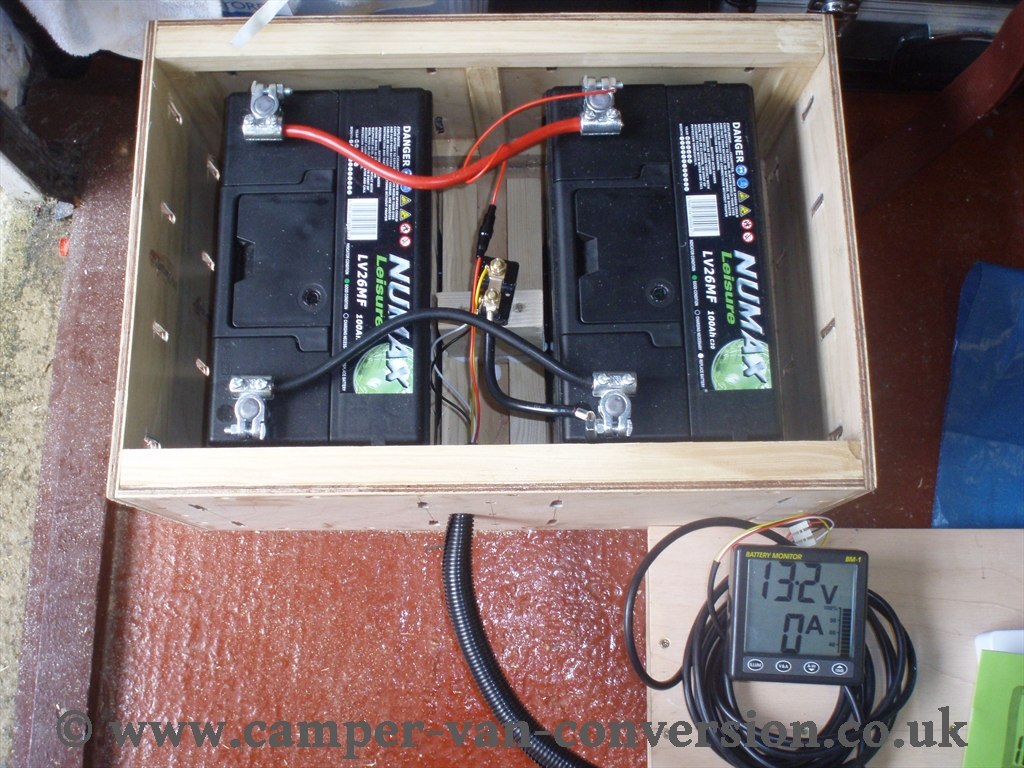
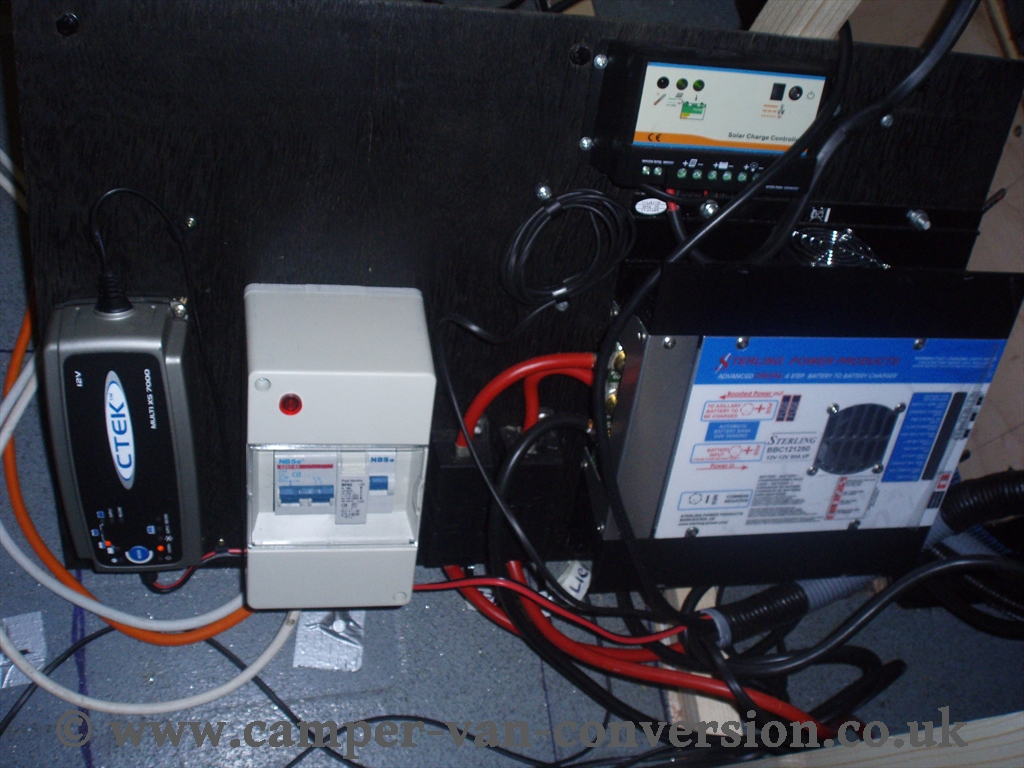
- Electrics: installing the cables, batteries and solar panels.
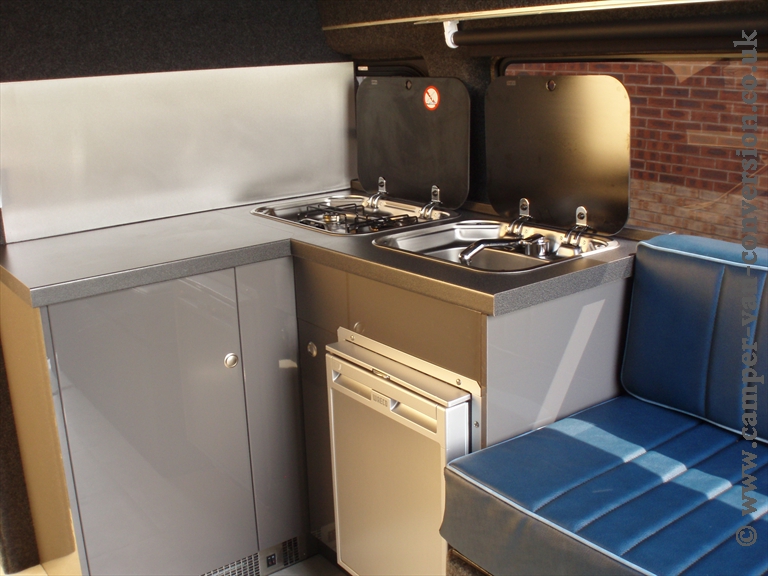
- Kitchen: building the kitchen area.
- Living area: seats, table and sleeping areas.
- Finishing touches: upholstery, edging and extra fittings.
- Summary of the completed van: pictures of the finished vehicle in use.
- Time and money: a great summary of the time and cost of each part of the conversion.
- Paperwork: re-registering the vehicle as a motor caravan, the MOT and insurance.
- Appendices: a build diary, useful internet resources and suppliers.
The costs, suppliers and paperwork date from 2009 to 2011, so check today’s prices and rules before you rely on them.
Colin’s conversion
Colin’s family, with two children, wanted to move up from camping to a camper van, but couldn’t find a commercial one that matched their needs and budget. Colin spent 12 months researching self-build and commercial campers, then bought the base vehicle: a 2006 Ford Transit T350 115PS, high-roof, long-wheelbase, 15-seat minibus.
Colin turned it into a four-berth camper over seven months of a very cold winter, working evenings and weekends. The build diary logged 299 hours of conversion work, not counting the thinking, the research and the time spent sourcing parts.
There’s no bathroom. Colin designed the van mainly for family days out and long family holidays on campsites, with a Porta Potti stored under a seat for emergencies. As Darren replied at the time, that’s the great thing about converting a van yourself: you get something that meets your own needs.
When the van was finished, Colin wrote to DVLA asking for the log book (V5C) to be changed to “Motor Caravan”, with the old V5C and numbered photos showing each part of the conversion. The new log book arrived three weeks later.
Photos
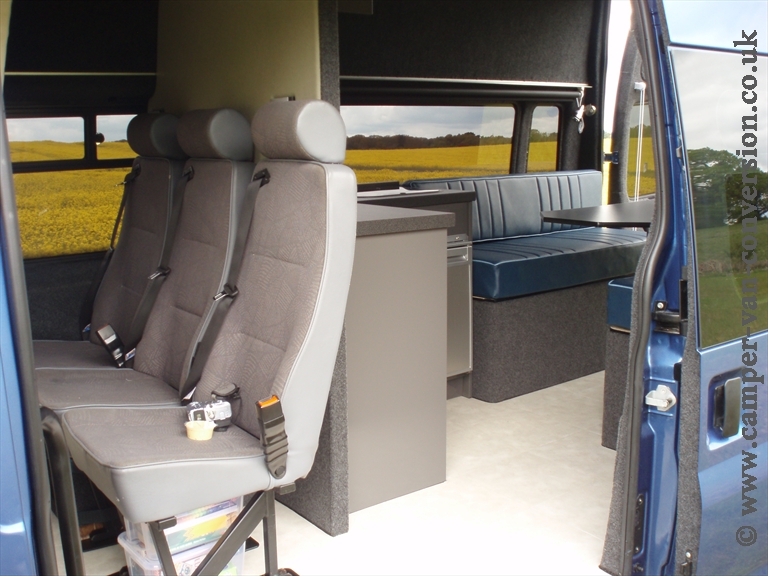
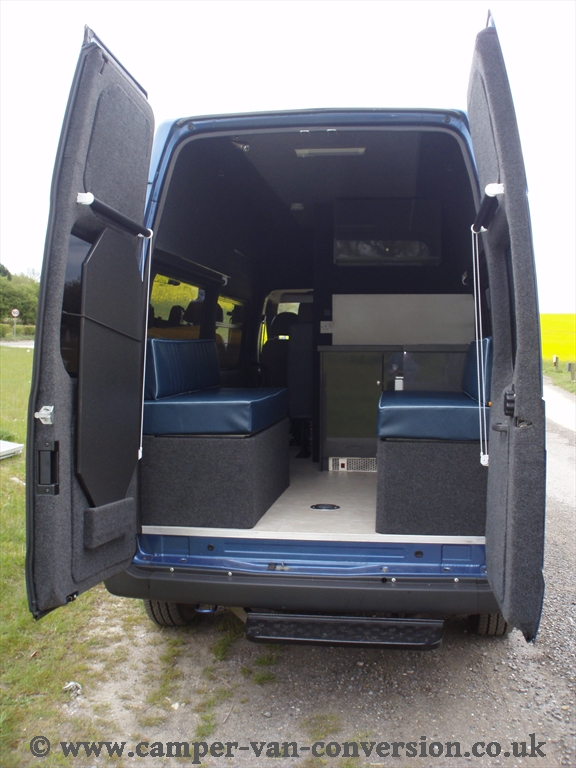
Here are some photos that show the quality of the conversion.
What has changed since 2010
The book’s paperwork chapter, and the VOSA document on the CD, describe the rules of 2010. Some have changed.
VOSA no longer exists. The Vehicle and Operator Services Agency closed on 31 March 2014, when it merged with the Driving Standards Agency to form the Driver and Vehicle Standards Agency (DVSA), which now runs MOT testing. Changing the log book to “motor caravan” is a matter for DVLA, which changed how it handled these applications in June 2019 and eased its guidance in October 2026. DVLA may ask to inspect the vehicle. You don’t have to change the log book at all: DVLA says a converted van can still be used as a campervan if it has the internal features of one (seats and a table, a bed, cooking and storage, all fixed in). More in legal information for conversions.
Converting a minibus brings a few rules of its own:
- Licence: a car (category B) licence covers vehicles with up to 8 passenger seats and a maximum weight of 3,500 kg for petrol and diesel. A minibus with more seats, like Colin’s 15-seater, needs category D1, so check your licence before you drive one home. More in choosing a base vehicle.
- MOT: a minibus with 13 to 16 passenger seats takes a Class 5 MOT, and a motor caravan takes Class 4. For a converted minibus, the class depends on the number of passenger seats left in it.
- Seats: keeping some of the minibus seats on their original mountings, as the maker fitted them, is the simplest way to have safe travel seats. More on seat belts.
- Outside: a high-roof minibus like Colin’s already has the side windows, the side door and the high roof that DVLA looks for if you want the log book changed.
Electrics, gas and insurance. Colin’s wiring diagram covers mains hook-up, solar power and battery-to-battery charging. Today the standards are BS EN 1648-2 for the 12 V system and section 721 of the IET Wiring Regulations (BS 7671) for mains hook-up; have any mains hook-up tested by a qualified electrician and keep the certificate (see campervan conversion electrics). The Gas Safety (Installation and Use) Regulations 1998 don’t apply to gas fittings in a privately owned campervan, but the safest course is to have the gas fitted or checked by a Gas Safe registered engineer qualified for LPG in leisure vehicles. Tell your insurer before you start converting, as a van policy may not cover a half-built camper (see campervan insurance).
For other ways to fit out a van, see example layouts and furniture and fittings, and for today’s Transits, see the Ford Transit.
Summary
Colin was a technical writer by profession, and in Darren’s view the quality of the work is apparent in the book: methods, techniques and approaches are described very well.
If you are considering a campervan conversion, whether a Ford Transit minibus or not, Darren reckons you’ll find the book a great source of information and a good investment before you start your conversion. Use it for the practical side, the jobs, the tools and the order to do them in, and check the current rules in legal information for conversions.
Colin’s book on Campervan Life
- Thinking about starting a camper van conversion? (2010), Colin’s own post
- Camper Van Conversion eBook now in paperback (2011)
Darren’s own conversion
- Camper van conversion (2006), the plan
- Bought a Mercedes Sprinter 208D van (2006)
- Insulating, wiring and panelling (2006)
- Making the seats and beds (2006)
- The kitchen and seat sides (2006)
- Electrics (2006)
More on building your own campervan
- Build your own campervan
- Choosing a base vehicle
- Ford Transit camper vans, motorhomes and vans
- Camper van conversion example layouts
- Conversion furniture and fittings
- Campervan conversion electrics
- Seat belt regulations
- Legal information for conversions
- Campervan insurance
Sources: Lulu (Camper Van Conversion paperback and PDF listings, and Colin Grace’s author page); Colin Grace’s own conversion and book websites (archived copies); Colin’s comments on Campervan Life (2010); DVLA guidance on converting a vehicle into a motor caravan (October 2026); gov.uk (VOSA and DVSA, driving licence categories, MOT test fees); BSI (BS EN 1648-2); the IET (BS 7671); Gas Safety (Installation and Use) Regulations 1998; checked November 2026. Know of a change? Tell us in the comments below.
To see more of my van :
Visit http://www.mycampervanconversion.co.uk. To see other great conversions see mycampervanconversion.com (no longer online).
All designed that way….
The van was designed not to have a bathroom, my requirements were for the van to be used mainly for family days out and long family holidays, where we would be on a campsite. However we do have a Porta Potti (stored under a seat) in case of any emergencies, although a bucket would have been cheaper !
Thanks for the nice comments on the conversion
regards
That’s the great thing about
That’s the great thing about converting vans ourselves – we get something that meets our own needs.
It looks a nice conversion.
It looks a nice conversion. It’s a pity Colin had to trade off a bathroom to keep the second row of seats. As it is, you’re restricted to campsites/places with toilets and can’t enjoy the full joys of a self-contained motorhome. It probably wouldn’t be too difficult to find a place for a Porta Potti, though.
bucket and chuckit?
bucket and chuckit?