
Last checked November 2026.
The Split Screen is the van that started it all, and good ones now sell for serious money. But a shiny paint job can hide a lot of rust, so know what you’re looking at before you hand over any cash.
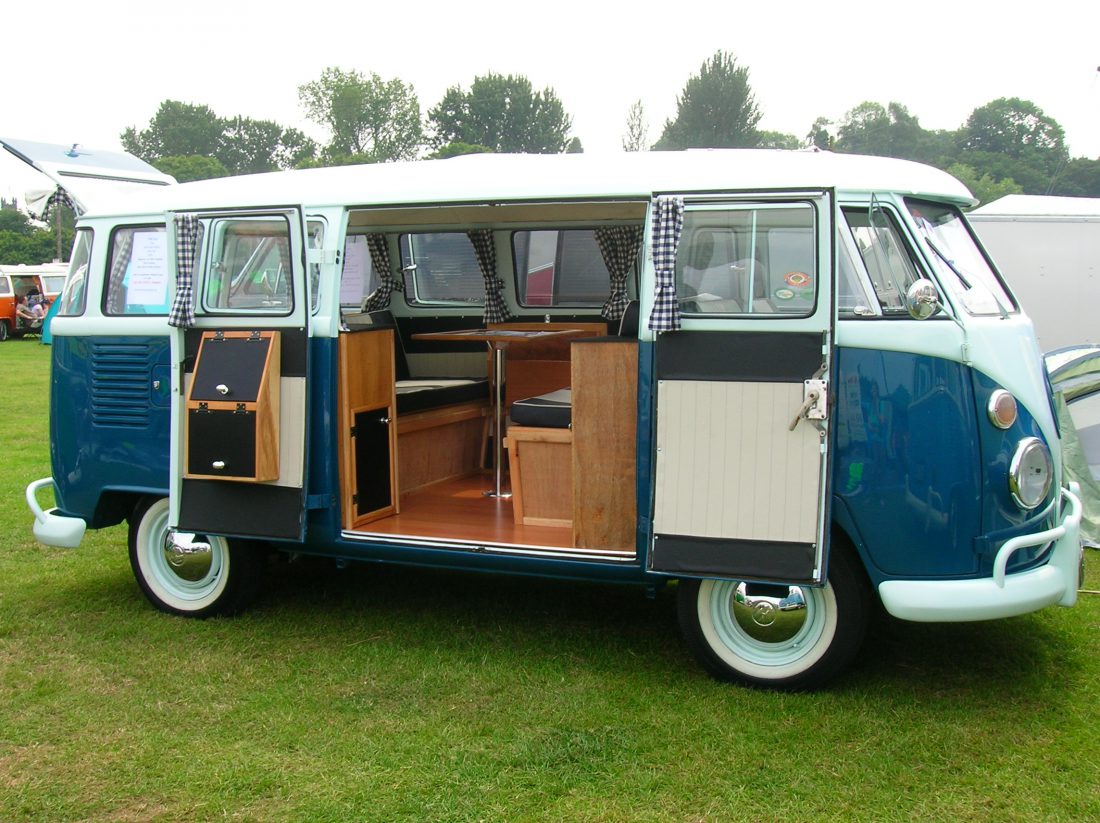
The Split Screen is the first VW Transporter, the T1. Inside VW it was the Type 2 (the Beetle was the Type 1), and VW says its two-piece windscreen earned it the nickname “Splittie” in Britain. Production started in Wolfsburg on 8 March 1950 and moved to Hanover in 1956. In July 1967, after more than 1.8 million had been built, the Bay Window replaced it in Germany, but VW kept building the T1 in Brazil until 1975. For the other generations see VW camper vans, and for the van that followed, the VW Bay Window buyers guide.
Models and years
The first Split was a panel van. VW says a Kombi, with windows in the back, followed in April 1950, and in June 1951 the “Small Bus Special Version”, which fans christened the Samba, with up to 23 windows, two-tone paint and a big folding roof. Pick-ups followed from 1952.
Heritage Parts Centre, a UK specialist, says the Barndoor vans, built until March 1955, have no peak over the windscreen, no tailgate and a very big engine lid (the “barn door”); they fetch considerably more, and not all their parts fit later Splits. For the 1963 model year a bigger tailgate did away with the rear corner windows, so the Samba went from 23 windows to 21.
Every Split has an air-cooled petrol flat-four in the back, from the Beetle. VW quotes 25 PS from 1,131 cc at launch and 44 PS later on. Heritage says engines from 1100 to 1600 cc were fitted, and that every Split left the factory with reduction boxes, which work like a second gearbox, trading top speed for pulling power. Heritage also says VW changed all its vehicles from 6 to 12 volts for the 1967 model year, from August 1966, so only the last German Splits left the factory with 12-volt electrics.
Split Screen campers
VW’s own history says Westfalia’s “Camping Box” turned the Transporter into the first compact motorhome; Westfalia says it built the first in 1951 for a British officer. Westfalia says its 1960s SO 34 and SO 42 campers sold in large numbers in the USA. Heritage says UK firms such as Dormobile and Devon converted many Splits too, and that original conversions, and parts for them, can be hard to find. More on Westfalia camper vans.
Brazilian and South African Splits
Volkswagen do Brasil built Transporters from September 1957, and VW says it kept making the T1 until 1975. Heritage and Just Kampers say South Africa also assembled Splits from Brazilian kits, as the Fleetline. Heritage says these later vans mix parts from different model years and generally sell for less than German ones, and that the chassis number will help you tell which you’re looking at.
Tax, MOT, clean air zones and insurance
Every Split is now more than 40 years old, which helps. The full rules are on VW camper vans; in short:
- Vehicle tax: a vehicle built before 1 January 1986 can go into the historic tax class from 1 April 2026. It’s free, but you still have to tax it, at a Post Office, and it doesn’t apply to a van used for hire or for a trade or business.
- MOT: in England, Scotland and Wales a vehicle built or first registered more than 40 years ago doesn’t need an MOT, unless it’s been substantially changed in the last 30 years. Another size of the same engine, or another engine VW fitted from the factory, is fine, but a change to the type or method of suspension or steering counts, unless it was made to improve safety, efficiency or environmental performance, or to keep the van going when original parts aren’t reasonably available, or is a kind of change made while the model was in production or within 10 years of the end. That matters on a Split: Just Kampers says swapping the original reduction-box rear end for a Beetle swing-axle or IRS rear is a common modification. If you can’t confirm a van hasn’t been substantially changed, you mustn’t claim the exemption. A van on a Q plate needs an MOT unless it’s in the historic tax class and hasn’t been modified in the last 30 years.
- Roadworthiness: an exempt van must still be roadworthy (using a vehicle in a dangerous condition can mean a fine of up to £2,500 and 3 penalty points), and the government suggests you may want a voluntary MOT anyway.
- London and England: Transport for London exempts every vehicle built before 1 January 1973 from the ULEZ, which covers every German-built Split; a later Brazilian or South African one needs the historic tax class. England’s Clean Air Zones exempt historic vehicles too.
- Scotland: the low emission zones only exempt vehicles over 30 years old that are preserved or kept in their original state, with no substantial changes, which a converted or modified Split may not be.
Northern Ireland has its own rules. A Split is well within a car licence: VW launched it as a three-quarter-tonne van, so even fully loaded it’s far below the 3,500 kg a category B licence covers.
Check the body type on the log book (V5C): a Split camper may be registered as a motor caravan, or still as a van or bus. DVLA says the body type shouldn’t affect the insurance category, but insurers set their own rules, so get quotes on the actual registration before you buy. The Financial Ombudsman says agreed-value policies, which pay a value agreed at the start, are mostly used for valuable or classic vehicles, and the Split Screen Van Club’s volunteers value members’ vans for them. Classic policies can limit your mileage, and you should tell the insurer about any engine change or LPG conversion. More in campervan insurance.
For a German-built Split, VW Classic Parts issues a Volkswagen certificate from the chassis number, showing the production date, where it was delivered, the original equipment and paint, and whether the engine is original; it can’t do Brazilian or African-built vans. Only the owner or keeper can order one, so ask the seller. It’s worth having for a Samba: Heritage says there are quite a few tribute Samba builds about. The Split Screen Van Club’s Van Register, with more than 7,000 entries, can help trace a van’s history, and it’s open to non-members.
Buying a Split from abroad
VW exported a million Transporters by 1966, many to North America. If you buy a van abroad, or one that’s been brought in but not registered, gov.uk says:
- You can’t use it on a public road until you’ve finished the import steps, except to drive to a pre-booked MOT or vehicle approval test.
- You must tell HM Revenue and Customs within 14 days that it has arrived, with a Notification of Vehicle Arrivals (NOVA). If any VAT and customs duty is due, a shipping company or customs agent has to make the import declaration.
- Vans and cars more than 10 years old don’t need vehicle approval.
- You then register it with DVLA on form V55/5, with the £55 fee, sending the original foreign registration certificate to show when it was built. Without one, DVLA might accept a letter from the manufacturer or a vehicle enthusiast club.
DVLA’s guidance says you can get an age-related number by proving the year of manufacture, which the chassis number can often show; the Volkswagen Owners Club (GB) says DVLA accepts VW’s data sheet as proof of age. A van whose age or identity is in doubt, or that’s been rebuilt mostly from used parts from different vehicles, is likely to get a Q plate. If a van once had a UK number but has never been on DVLA’s records, you may get the old number back on form V765, endorsed by a club on DVLA’s list such as the Split Screen Van Club, if you have evidence linking the two, such as the original log book.
On a left-hand drive van, DVSA says vehicles on UK plates should have headlights that dip to the left, though the MOT accepts masks or converter kits on right-dipping lights.
What to check
Take someone who knows Splits, or pay for an inspection, and don’t rush. The checks for any used van, from the free MOT history to the log book, are in our campervan buyers guide.
Rust
Rust is the big one. Just Kampers says every panel is at risk and it can be very costly to sort. Heritage suggests taking a magnet to find filler, a torch, and something to lie on. Look:
- all round the bottom six inches: the lower front panel and valance, cab steps, door bottoms, sills and rear valance
- at the chassis box sections, front and rear outriggers, jacking points and cross members, for patches and old welding
- at the roof gutters, the windscreen surround, the front roof panel and around the side windows
- at the wheel arches inside and out
- at the floors in front of the rear wheels and behind the front seats; Just Kampers says cab floors often rust right through
- at the bottom of the tailgate and engine lid, and the battery tray, which Hagerty UK lists with the chassis rails, outriggers, front axle and suspension mounts as potential MOT failures
- under any cover plates, which can hide a horror story of trapped moisture and rust
Watch out for hidden, patched-over horrors on restored vans. Just Kampers says rising values may have tempted owners to cut corners, and that you’re often better off with an original, unrestored van, even a tatty and rusty one.
Lowered suspension
Be careful of campers with suspension lowered to make them look cool:
- the ride can be harsh
- visibility is reduced
- you can’t crawl underneath to do repairs
Ask how it was done: changing the type or method of suspension can count as a substantial change for the MOT exemption.
Engine, gearbox and clutch
- Pull and push the bottom (crankshaft) pulley. If you feel a loud “clunk clunk”, the engine needs a rebuild; very small movement is OK.
- Oil leaks where the engine meets the gearbox usually mean an “engine out” job. Heritage says it’s often the rear main oil seal, a cheap part, but the engine has to come out to fit it.
- Just Kampers says the engines are worked hard, so look for smoke, and that poor running often just means the carburettor needs an overhaul.
- The engine is cooled by air, so watch for overheating; Just Kampers says the thermostat and cooling flaps must work.
- Listen to the gearbox for bearing whine, and check all the gears work and it doesn’t jump out of gear. A floppy gear change is normal. Just Kampers says the factory reduction boxes are often leaky and temperamental.
- The clutch shouldn’t judder.
- Ask which engine and gearbox it has. Hagerty says swaps to later VW, Porsche and Subaru engines are common, as are LPG conversions, which can affect the MOT exemption and your insurance.
Brakes, steering and suspension
- Steering should be direct with hardly any play. Just Kampers says the idler pin wears and needs a special tool to fix; if that’s fine, check the steering box.
- Heritage says Splits had drum brakes all round, though some now have discs. The van should stop in a straight line, and Just Kampers says brakes can seize on a van that’s been standing.
- Just Kampers says early vans’ suspension needs regular lubrication, and the rear sags with age as the torsion bars wear.
Heater, fuel and electrics
- Heater: a heater that doesn’t work can mean new heat exchangers, but Heritage says the commonest cause on air-cooled VWs is heater cables not reconnected after the engine was last out, and a smell of smoke or stinging eyes means exhaust fumes are getting in.
- Petrol smell: a smell of petrol inside the van usually means the rubber fuel hoses need replacing. Don’t ignore it: Club 80-90, the UK club for the T25, warns that VW buses are more prone to fuel fires than many other petrol vehicles.
- Fuel tank: tanks can also rust through where they come into contact with more rust.
- Electrics: check the wipers, lights and indicators work. Heritage says bad earths and corroded connections cause lots of problems, and Just Kampers warns that camper electrics may have been bodged by DIYers.
The camper side
Put the pop-up roof up and look at the canvas and seals for leaks, damp and mould. Try the sliding door if it has one, the cooker, cool box or fridge, sink and pump, and ask who fitted the gas and electrics. An old van may have simple seat belts, or none; see seat belts in campervans.
Finding a good repair shop
Get repairs and advice from:
- an experienced VW camper repair shop that’s been going for more than 5 years
- one that will show you a van it has restored, or give you a customer reference
- other owners in the clubs below
Parts, clubs and magazines
Hagerty UK says spares are plentiful and cheap compared with many other classics. Get them from:
- Just Kampers, Odiham, Hampshire (01256 862288), which also publishes a Split Screen buyers’ guide with a diagram of the rust spots
- Alan H Schofield Ltd, Glossop, Derbyshire (01457 854267), for most body panels
- eBay, for new and used parts
The Split Screen Van Club, founded at Stanford Hall in May 1983, says it’s the only national club just for Splits, with about 900 members; you don’t need to own one to join. Members get a quarterly magazine, technical help and camping weekends. The Volkswagen Type 2 Owners Club covers all Type 2s, and the Volkswagen Owners Club (GB) every kind of VW. The Split Screen Van Club says VW Motoring is no longer published, but VolksWorld and VW Camper & Bus are still listed by their publisher, Kelsey Media, in November 2026.
Prices
Hagerty UK said in July 2026 that VW van prices, from the earliest Barndoor Splits on, had generally come down since the Covid-19 boom, but that early split-screen buses still tend to fetch the highest values, and the more windows a van left the factory with, the more it’s worth. The 23-window Samba is the most collectable: the public auction record was set in Paris in October 2022, when one sold for €192,853 against an estimate of €50,000 to €70,000. VW said in 2025 that, depending on the variant, some fetch six-figure sums in euros.
In November 2026 Hagerty UK’s price guide gave these values for two Splits, which it lists as Transporters:
| Van | Fair | Good | Excellent | Concours |
|---|---|---|---|---|
| 1953 (T1a), 1100 | £13,800 | £21,700 | £41,700 | £60,800 |
| 1965 (T1c), 1500 | £12,900 | £20,000 | £34,900 | £52,000 |
Hagerty’s “fair” is a daily driver with flaws you can see; “concours” is the best in the world, unmodified. Hagerty says original vans, especially factory Westfalia campers, are very sought-after, that Devon, Dormobile, Danbury and Viking conversions and right-hand drive vans fetch a premium in the UK, and that rust and tired engines are the main problems for buyers. Whatever you pay, keep money back for repairs.
Reasons why you shouldn’t buy one
- Because it looks cool or restored, but you haven’t looked underneath and don’t want to keep maintaining it.
- It has a six-volt system when you want reliability, though converting to 12 volts is easier than people realise.
- You think it will be fast or economical. VW quotes a top speed of 80 km/h (50 mph) for the first Splits, and Heritage says to accept a 50 mph cruising speed and stop every couple of hours to let the engine cool.
In 2006, looking for a van for surf trips in Cornwall and Devon, Darren thought VW campers were expensive, uneconomical and difficult to maintain, and found that the popularity of VW vans had pushed prices there so high that one wasn’t a realistic option anyway. Darren wanted a diesel van tall enough to almost stand up in, so the Pampy Camper was a Mercedes Sprinter.
Darren’s posts
- Camper van conversion (2006), the plan
- Mercedes Sprinter conversion: the Pampy Camper, including why Darren didn’t buy a VW
More on VW campers
- VW camper vans and VW Transporter
- Westfalia camper vans
- VW Bay Window camper van (Type 2 T2) buyers guide
- A guide to buying a VW camper van and VW Split Screen campervans for sale
- Campervan buyers guide and buying and selling camper vans
- Campervan insurance
Sources: Volkswagen (Group chronicle; “75 years of the VW Bus”, March 2025; Volkswagen Nutzfahrzeuge history; Volkswagen Classic Parts); Westfalia company history; Just Kampers and Heritage Parts Centre (Split Screen buyers’ guides and histories); Hagerty UK (price guide, November 2026; Valuation Verdict, July 2026); gov.uk (historic vehicles, historic vehicle MOT exemption criteria, Clean Air Zones, importing vehicles, vehicle approval, vehicle registration, MOT inspection manual); DVLA (list of vehicle owners clubs, V765/1; converting a vehicle into a motor caravan); DVSA; Transport for London; mygov.scot; Financial Ombudsman Service; Split Screen Van Club; Volkswagen Owners Club (GB); Club 80-90; Kelsey Media; checked November 2026. Know of a change? Tell us in the comments below.